
Anxiety and Interviews – Impact on Performance
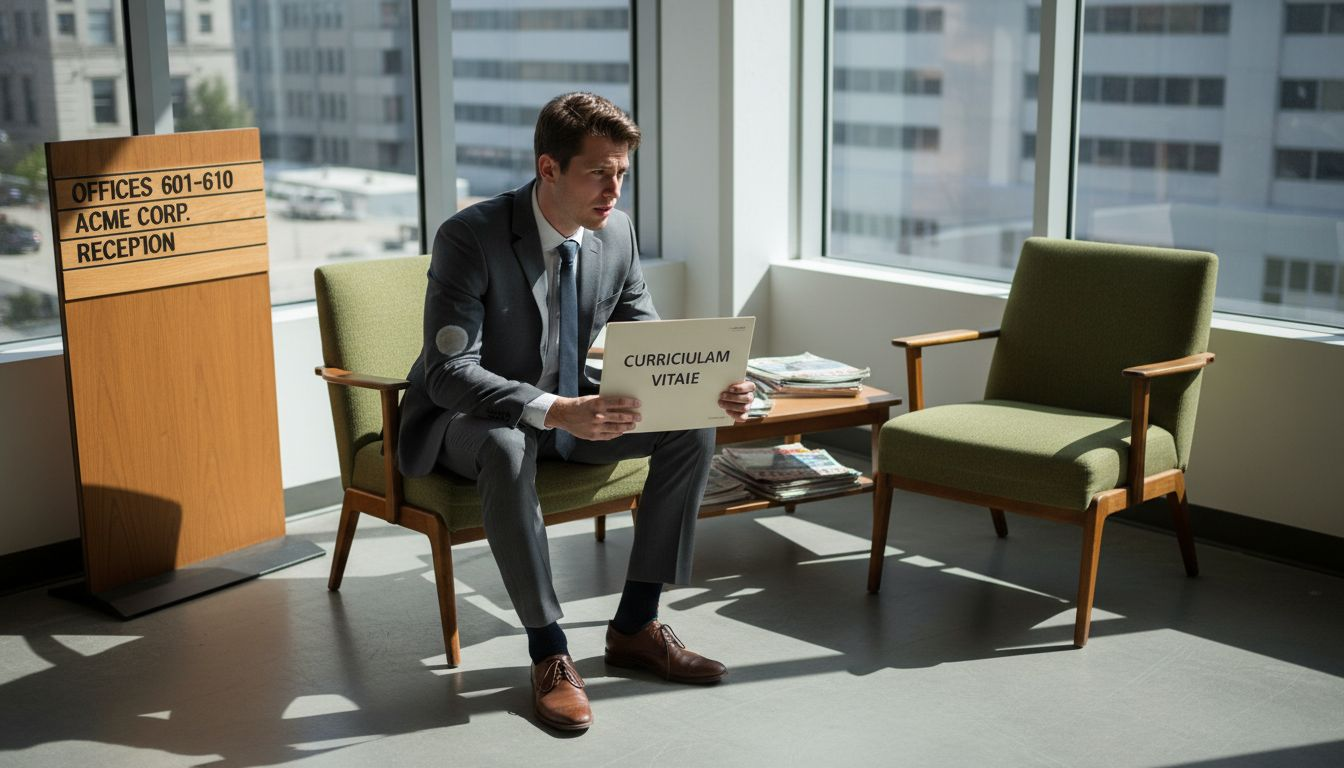
Nerves often surface even for the most experienced professionals when an important English-language video interview approaches. In high-pressure interview situations, anxiety is more than just a fleeting worry. Research shows that these nerves can alter your behaviour, affecting how assertive and confident you appear to interviewers. By understanding the subtle signs of interview anxiety and using practical strategies, you can shift this natural response and show your strengths more clearly.
Table of Contents
- Defining Anxiety In Interview Settings
- Common Types And Symptoms Experienced
- Why Interviews Trigger Anxiety Responses
- How Anxiety Impacts Communication Delivery
- Evidence-Based Strategies For Managing Nerves
- Role Of Practice Platforms In Building Confidence
Key Takeaways
| Point | Details |
|---|---|
| Understanding Interview Anxiety | Interview anxiety is a specific emotional response that can severely hinder professional performance in interviews. Recognising it as a common experience is the first step toward effective management. |
| Impact on Communication | Interview anxiety disrupts both verbal and non-verbal communication, leading to decreased effectiveness in conveying capabilities. Strategies for preparation can help mitigate these communication barriers. |
| Evidence-Based Strategies | Implementing cognitive restructuring and physiological regulation methods can transform anxiety into a performance enhancer. Daily practice of mindfulness techniques can build resilience and emotional control. |
| Role of Technology in Preparation | AI-driven mock interview platforms provide personalised feedback and a safe environment for skill development, significantly reducing anxiety while enhancing confidence for actual interviews. |
Defining Anxiety in Interview Settings
Job interview anxiety represents a complex psychological state that significantly impacts professional performance. Unlike generalised anxiety, interview anxiety manifests as a specific, high-stakes emotional response triggered by the evaluation and potential career implications of job interviews.
Research indicates that interview anxiety is a nuanced experience characterised by several key psychological and physiological dimensions. Behavioural cues reveal interview anxiety through subtle changes in communication patterns, body language, and interpersonal interactions. These manifestations can profoundly influence an interviewer’s perception of a candidate’s competence and suitability.
Key characteristics of interview anxiety include:
- Heightened self-consciousness
- Increased physiological stress responses
- Reduced verbal fluency
- Impaired cognitive processing
- Disrupted non-verbal communication
The academic understanding of interview anxiety extends beyond mere nervousness. Performance anxiety in professional settings represents a complex interplay between psychological preparedness, self-perception, and external evaluation pressures. Mindful acceptance techniques suggest that anxiety can be transformed from a debilitating experience into a potential performance catalyst.
Professional interviewees experience anxiety differently based on individual personality traits, prior experiences, and personal confidence levels. Some individuals might perceive interview situations as threatening, triggering a fight-or-flight response that compromises their ability to communicate effectively.
To clarify the distinct aspects of interview anxiety, here’s a summary table of key psychological and physiological impacts:
| Dimension | Typical Interview Impact | Business Consequence |
|---|---|---|
| Self-Perception | Reduced self-confidence | Lower perceived competence |
| Cognitive Function | Impaired decision-making | Less effective problem solving |
| Communication Fluency | Increased verbal errors | Compromised presentation |
| Body Language | Defensive non-verbal cues | Negative impression on panel |
| Stress Regulation | Heightened physical tension | Decreased stamina and focus |
Pro tip: Recognise that interview anxiety is a normal human response and can be managed through targeted preparation and psychological techniques.
Common Types and Symptoms Experienced
Interview anxiety is not a monolithic experience but a complex constellation of psychological and physiological responses that manifest across multiple dimensions. Anxiety symptoms span multiple domains of human experience, creating a multifaceted challenge for professionals preparing for job interviews.
These symptoms typically cluster into four primary categories:
-
Physiological Symptoms
- Increased heart rate
- Excessive sweating
- Muscle tension
- Trembling hands
- Dry mouth
-
Cognitive Symptoms
- Racing thoughts
- Difficulty concentrating
- Negative self-talk
- Memory lapses
- Catastrophic thinking
-
Behavioural Symptoms
- Avoidance of interview preparation
- Procrastination
- Excessive rehearsing
- Speech impediments
- Nervous gestures
-
Emotional Symptoms
- Overwhelming fear
- Self-doubt
- Imposter syndrome
- Feelings of inadequacy
- Performance panic
Global health research highlights that these symptoms are not merely psychological inconveniences but genuine physiological responses that can significantly impair professional performance. The autonomic nervous system plays a critical role, triggering fight-or-flight mechanisms that can overwhelm rational thinking.
Professionals experiencing these symptoms often find themselves trapped in a self-reinforcing cycle where anxiety generates more anxiety, creating substantial barriers to effective communication and self-presentation during interviews.

Pro tip: Recognise that these symptoms are normal human responses and can be systematically managed through targeted preparation and psychological strategies.
Why Interviews Trigger Anxiety Responses
Evolutionary survival mechanisms deeply influence our anxiety responses during interviews. Our brain interprets professional interviews as potential social threats, activating primitive neurological defence systems that evolved to protect us from perceived dangers.
The core anxiety triggers can be categorised into several key psychological domains:
-
Social Evaluation Threats
- Fear of negative judgment
- Potential public rejection
- Perceived performance scrutiny
- Risk of social embarrassment
- Career reputation implications
-
Uncertainty Factors
- Unknown interview dynamics
- Unpredictable questions
- Unfamiliar evaluation criteria
- Potential power imbalances
- Limited control over outcomes
-
Personal Vulnerability Triggers
- Self-doubt about competence
- Imposter syndrome manifestations
- Past professional rejection memories
- Performance expectation pressures
- Cultural success narratives
Research on job interview experiences demonstrates that anxiety intensity correlates strongly with individual professional experience levels. Less experienced professionals typically experience more pronounced anxiety responses, reflecting deeper psychological vulnerabilities about professional validation.
The autonomic nervous system plays a critical role in these anxiety responses, transforming interview scenarios from professional opportunities into perceived existential challenges that activate complex physiological stress mechanisms.
Pro tip: Recognise that interview anxiety is a natural human response rooted in evolutionary survival mechanisms, not a personal failing.
How Anxiety Impacts Communication Delivery
Communication anxiety fundamentally disrupts verbal and non-verbal interaction patterns during interviews, transforming potentially confident professionals into individuals struggling to articulate their capabilities effectively.
The communication delivery challenges manifest across multiple critical dimensions:
-
Verbal Communication Disruptions
- Increased speech hesitations
- Reduced verbal fluency
- Higher frequency of filler words
- Difficulty maintaining coherent narratives
- Fragmented thought expression
-
Non-Verbal Communication Impairments
- Reduced eye contact
- Excessive nervous movements
- Defensive body postures
- Compromised facial expressions
- Diminished physical presence
-
Cognitive Processing Challenges
- Working memory interference
- Reduced information retrieval speed
- Heightened self-monitoring
- Intrusive negative thought patterns
- Decreased mental clarity
Research demonstrates communication anxiety substantially increases perceived stress, creating a self-reinforcing cycle where anxiety generates additional performance anxiety, progressively eroding communication effectiveness.
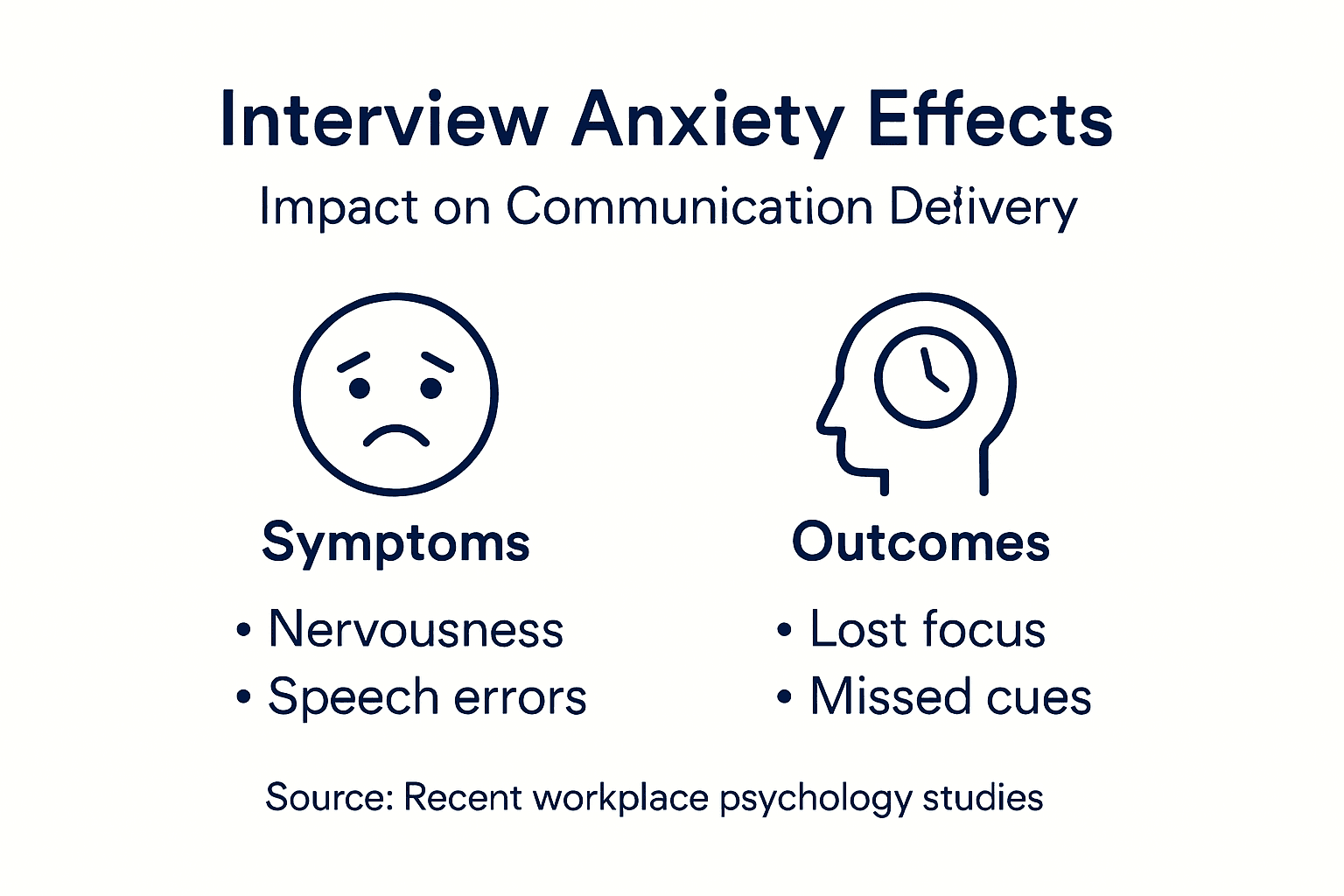
The psychological feedback loop becomes particularly insidious, with each communication misstep potentially triggering increased self-doubt and further communication deterioration during high-stakes professional interactions.
Pro tip: Develop structured mental preparation techniques to interrupt anxiety-driven communication patterns before they gain momentum.
Evidence-Based Strategies for Managing Nerves
Empirically validated counselling approaches offer systematic techniques for managing interview-related anxiety, transforming potentially debilitating stress into constructive performance preparation.
Professionals can implement several evidence-based strategies to mitigate anxiety responses:
-
Cognitive Restructuring Techniques
- Challenge negative thought patterns
- Replace catastrophic thinking with rational perspectives
- Develop positive self-dialogue
- Reframe anxiety as performance anticipation
- Visualise successful interview scenarios
-
Physiological Regulation Methods
- Controlled deep breathing exercises
- Progressive muscle relaxation
- Mindfulness meditation practices
- Heart rate variability training
- Grounding techniques
-
Psychological Preparation Strategies
- Systematic interview preparation
- Mock interview rehearsals
- Confidence-building self-talk
- Emotional regulation skills
- Performance visualisation
The psychological preparation framework involves understanding anxiety as a modifiable internal experience rather than an immutable personal limitation. By systematically developing emotional regulation skills, professionals can transform anxiety from a performance barrier into a potential catalyst for heightened awareness and precision.
Cognitive-behavioural approaches emphasise the importance of recognising anxiety triggers, developing personalised coping mechanisms, and creating structured mental preparation routines that interrupt negative psychological patterns before they escalate.
Pro tip: Practice mindfulness and breathing techniques daily, not just before interviews, to build robust emotional regulation skills.
For professionals seeking anxiety management strategies, here’s a comparison of evidence-based approaches and their practical benefits:
| Method | Core Feature | Typical Outcome |
|---|---|---|
| Cognitive Restructuring | Reframes negative thoughts | Improved mental clarity |
| Physiological Regulation | Controls stress responses | Calmer physical state |
| Psychological Preparation | Structured rehearsal | Enhanced confidence in delivery |
| Practice Technology | AI-driven feedback | Objective improvement tracking |
| Mindfulness Techniques | Daily emotional training | Greater resilience over time |
Role of Practice Platforms in Building Confidence
AI-driven mock interview technologies represent a transformative approach to reducing interview anxiety by providing personalised, data-driven performance feedback that systematically builds professional confidence.
These innovative platforms offer comprehensive preparation mechanisms through multiple strategic features:
-
Personalised Skill Assessment
- Emotion recognition analysis
- Speech pattern evaluation
- Confidence level measurement
- Semantic content understanding
- Objective performance tracking
-
Technical Feedback Dimensions
- Real-time verbal communication assessment
- Non-verbal behaviour analysis
- Linguistic complexity evaluation
- Emotional response monitoring
- Comparative performance metrics
-
Psychological Confidence Building
- Repeated practice opportunities
- Safe, low-stakes environment
- Incremental skill development
- Constructive performance insights
- Gradual anxiety desensitisation
Advanced practice platforms democratise professional interview preparation by providing accessible, technologically sophisticated training that transcends traditional coaching limitations. The algorithmic feedback mechanism enables candidates to understand subtle communication nuances that traditional preparation methods often overlook.
Technological interventions transform interview preparation from a stressful experience into a structured, supportive learning journey, enabling professionals to develop genuine confidence through systematic, data-informed practice.
Pro tip: Treat practice platforms as collaborative learning tools, not judgmental evaluations, to maximise skill development and reduce performance anxiety.
Transform Interview Anxiety into Confident Performance
Feeling overwhelmed by nervousness and struggling to communicate clearly during interviews is a common challenge. As this article highlights, interview anxiety affects your self-confidence, verbal fluency, and non-verbal cues — all crucial for making a strong professional impression. You do not have to let physiological stress responses or negative self-talk hold you back from showcasing your true potential.
With Pavone.ai, you can practise interview answers in a safe and private environment designed specifically to combat these anxiety triggers. Pavone’s smart feedback on clarity, pacing, confidence, and filler words helps you become more concise and assured in your delivery. By integrating focused practice into your routine, Pavone transforms anxiety into preparation, turning each attempt into measurable progress.
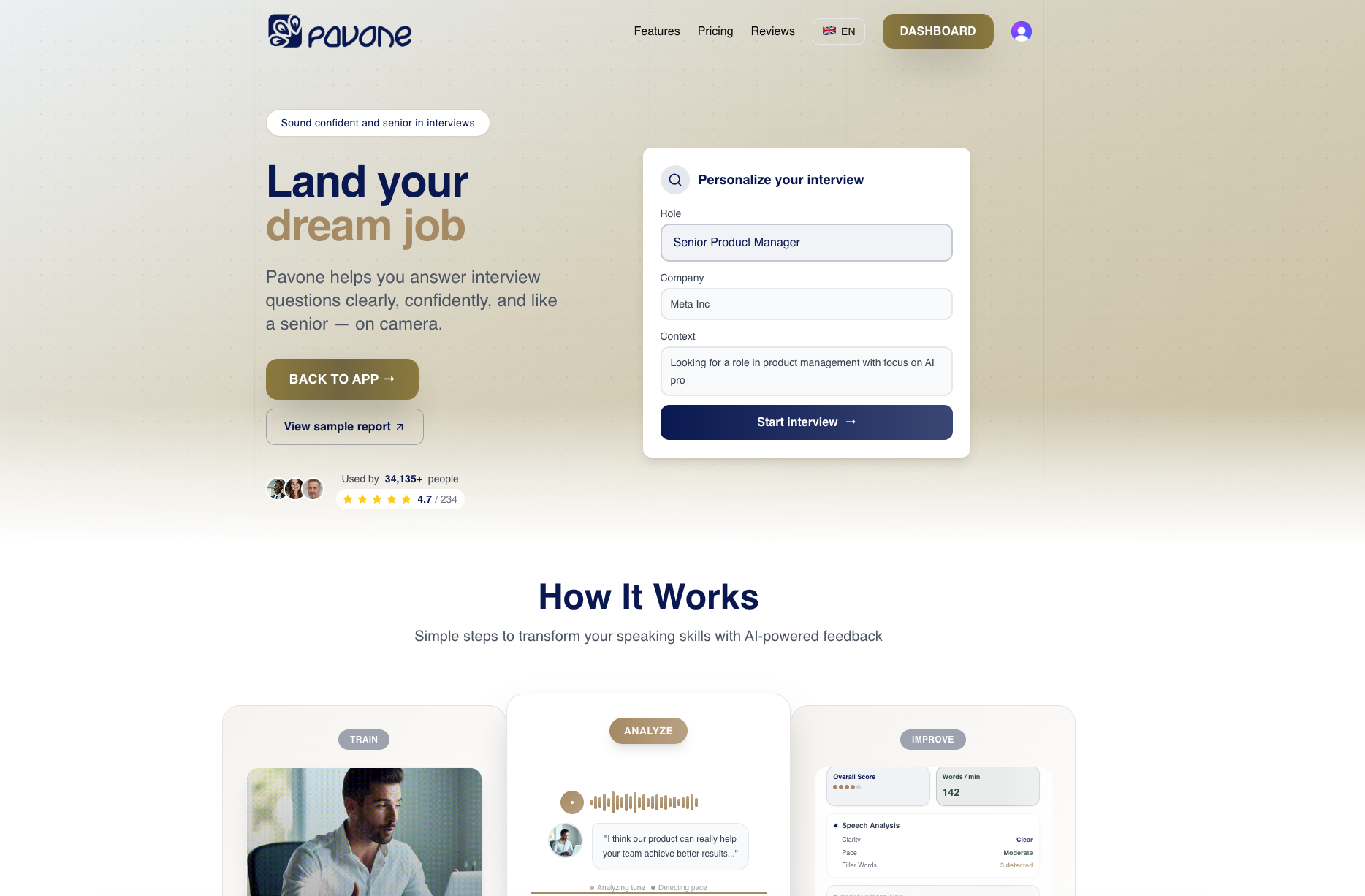
Take control of your interview nerves now and experience the difference personalised coaching can make. Discover how quickly you can improve with Pavone.ai and unlock your most confident interview self today.
Frequently Asked Questions
What is interview anxiety and how does it affect performance?
Interview anxiety is a specific emotional response triggered by the high-stakes nature of job interviews. It can lead to heightened self-consciousness, reduced verbal fluency, and impaired cognitive processing, ultimately compromising a candidate’s ability to communicate effectively and showcase their suitability for the position.
What are common symptoms of interview anxiety?
Symptoms of interview anxiety can be categorised into physiological (e.g., increased heart rate, sweating), cognitive (e.g., racing thoughts, memory lapses), behavioural (e.g., avoidance of preparation, excessive rehearsing), and emotional (e.g., overwhelming fear, self-doubt). These symptoms can significantly hinder performance during interviews.
How can I manage anxiety during job interviews?
Managing interview anxiety can be achieved through evidence-based strategies such as cognitive restructuring techniques to challenge negative thoughts, physiological regulation methods like deep breathing, and thorough psychological preparation through mock interviews. Practicing these techniques regularly can help build confidence and reduce anxiety.
Do AI-driven mock interview platforms help reduce anxiety?
Yes, AI-driven mock interview technologies provide personalised feedback on verbal and non-verbal communication, helping candidates build confidence and improve performance. These platforms offer a low-stakes environment for repeated practice, which can gradually desensitise anxiety and enhance overall interview skills.
Recommended
- How to Speak Confidently in Job Interviews - Pavone
- How Do I Prepare for Interview: Achieve Clear Confident Delivery | Pavone Academy
- 7 Best Interview Questions and Answers Examples for Clarity | Pavone Academy
- Corporate Interview Questions: Succeeding with Clarity | Pavone Academy
- The Fishbowl Effect in Enrollment Leadership
- Outdoor Group Games For Adults Perfect for Team Building
Ready to practice?
Start improving your speaking skills with AI-powered feedback and analysis.
Try Pavone Free